

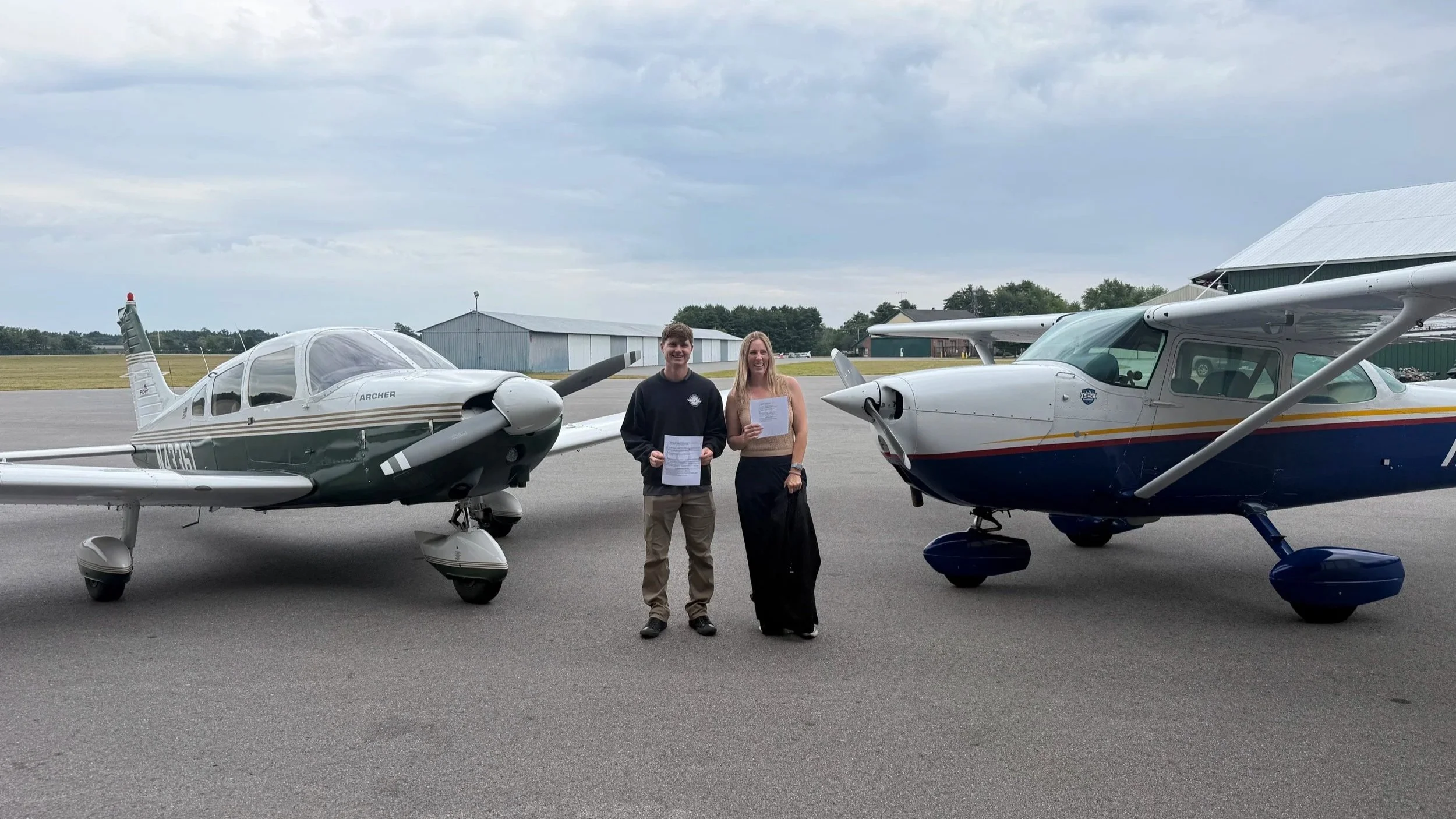
Congratulations to our Newest Private Pilots!
At The Flight School, we carry a low student count because we are vested in our students success. When you train with us, you become part of the TFS Family, receiving 1 on 1 support from our team.
Kelly comes from a line of Aviators, her Grandfather was shot down in the Pacific in WW2 and survived. Her Father was a Fighter Pilot and Airline Pilot, and her Brother is an Airline Pilot. She follows in her families footsteps earning her PPL on 8/20.
Alexanders father is a Pilot/Mechanic, and he is following in his two brothers footsteps who are both Professional Pilots. Alexander is a natural, having flown with his brothers since he was 15 yrs old.
CFI’s Jared and Chris Instructed both pilots.
THE FLIGHT SCHOOL
TFS is owned by a 26+ Yr Major Airline Captain/Check Airman. All Flight Instructors work as Professional Pilots for Airlines or Corporate Flight Departments. Learn from Professionals who do it everyday, and who utilize the best Standardization and Training the industry has to offer.
Discovery Flights! Book a 1 Hour Discovery Flight for $250
Sport Pilot (MOSAIC)
Private Pilot
Instrument Rating
Commercial Pilot
Certified Flight Instructor / Instrument Instructor
Other services offered:
Technically Advanced Training (TAA)
Biannual Flight Reviews (BFR) in your own aircraft
Instrument Proficiency Check (IPC) in your aircraft or our TAA C172
Remedial Training and Wings Credit that count towards your BFR.
Fear of Flying Courses
We are also part of the FAA Safety Team (FAASTeam) and offer Wings credit for any certified Airman who desires to become a more safe, more prepared, and more confident pilot!
***Discounts***
We know flying is expensive, so we offer various ways to make your dream a reality. We don't nickel and dime, and we don’t add that extra .3 ground on every flight.
Flights are billed on Hobbs time.
Ground is only billed for Ground School.
We offer additional ways to save you money:
Flat Rate Pricing Packages Available.*
10% Discount for 10 Hours of Block Purchased ($22/hr Discount)
Military, Veteran, and Airline Discounts
Heavy use of low cost simulator training to save you money in the air. Our PPL Students finish on average with 50 hrs of flight time vs the National Average of 70 hrs.
*Limitations and Prerequisites Apply.
-
Flying is expensive. At TFS, we offer 3 different cost structures depending on your needs and motivation.
Cost: See Packages Here
Private Pilot Course Overview
Course purpose
Prepare students to obtain a Federal Aviation Administration (FAA) Private Pilot Certificate (Airplane, Single-Engine Land).
Build foundational aeronautical knowledge, flight proficiency, decision-making, and risk management for safe, legal solo and cross-country operations.
Who should enroll
Aspiring private pilots age 17 or older (minimum age for certificate issuance).
Individuals seeking personal travel capability, recreational flying, or a stepping stone to advanced certificates (instrument, commercial, flight instructor).
No prior flight experience required; medical eligibility (FAA Third-Class medical or BasicMed where applicable) recommended before solo training.
Course prerequisites
Ability to read, speak, write, and understand English.
Hold at least a third-class FAA medical certificate or meet BasicMed requirements prior to solo.
Student pilot certificate required before solo flight (instructing school will guide application).
Course structure Ground School
Classroom or online instruction covering FAA-required knowledge areas:
Regulations and certificate requirements
Aerodynamics and aircraft systems
Flight instruments and avionics
Weather theory, reports, and forecasts (METARs, TAFs)
Navigation (pilotage, dead reckoning, VOR, GPS basics)
Airspace, communications, and flight planning
Performance, weight and balance, and aircraft loading
Human factors, aeromedical factors, and ADM (Aeronautical Decision Making)
Emergency procedures and safety management
Includes instructor-led lectures, scenario-based training, knowledge checks, and a comprehensive review before the FAA written knowledge test.
Flight Training
Dual instruction flights with a Certified Flight Instructor (CFI) progressing to solo and cross-country flights.
Typical training elements:
Preflight inspection and aircraft familiarization
Taxiing, run-up, and ground operations
Basic maneuvers: straight-and-level, climbs, descents, turns
Traffic patterns, takeoffs, landings, go-arounds
stalls and recovery, slow flight, emergency procedures
Navigation flights: pilotage, dead reckoning, GPS/RNAV, and VOR navigation
Night operations (if included in training curriculum)
Cross-country flights meeting FAA PIC requirements
Solo flights to build experience and confidence
Minimum FAA flight time: 40 hours total (includes at least 20 hours of dual instruction and 10 hours of solo), though national averages are often 60–70 hours; training duration adjusted to individual progress.
Certification milestones
FAA Private Pilot Written Knowledge Test: completed after ground-school preparation.
Solo endorsement(s): instructor endorsement required before first solo and for solo cross-country flights.
Practical Test (Checkride): FAA-designated examiner conducts oral exam and flight test after applicant meets aeronautical experience and knowledge requirements.
Training duration and scheduling
Typical completion time: 3–9 months depending on student availability, frequency of lessons, weather, and individual aptitude.
Intensive programs available for accelerated completion in 6-8 weeks.
Flexible scheduling: daytime, evenings, and weekend lessons.
Aircraft and equipment
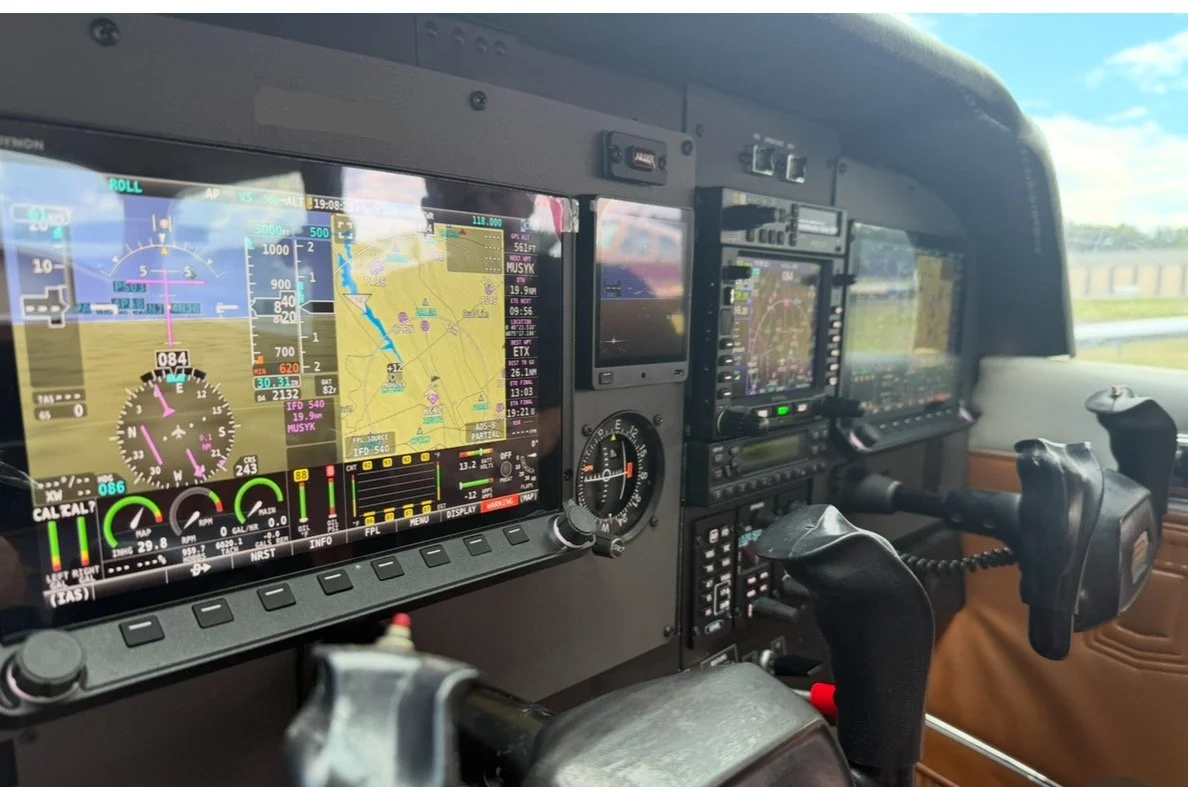
Training conducted in our Technically Advanced Cessna 172M, equipped with the Dynon Skyview Advanced Glass Cockpit
Students expected to provide basic flight bag items: headset, logbook, kneeboard, navigation plotter, E6B flight computer (or electronic equivalent), and study materials.
Ground school materials: FAA Airman Certification Standards (ACS), FAR/AIM, PHAK (Pilot’s Handbook of Aeronautical Knowledge), Airplane Flying Handbook, and approved test prep resources.
Safety and standards
Emphasis on risk management, preflight planning, and safe operating practices.
Training follows FAA standards and the Airman Certification Standards (ACS) for the private pilot practical test.
Regular progress reviews and endorsements only when performance meets standards.
Cost estimate
Varies by region, aircraft rental rates, instructor fees, fuel prices, and number of hours required.
The National Average for Private Pilots is 70 hrs. Which equates to approx. $20,000
Outcomes and next steps
Graduates eligible to receive FAA Private Pilot Certificate upon successful completion of written exam and practical test.
Able to fly as Pilot in Command (PIC) of single-engine land airplanes for personal or recreational purposes, carry passengers, and conduct cross-country flights (subject to currency and limitations).
Natural progression: Instrument Rating, Commercial Pilot Certificate, Certified Flight Instructor (CFI) path, or additional aircraft category/class ratings.
Enrollment process
Introductory discovery flight or evaluation lesson recommended before committing.
A structured path from first lesson to checkride with one-on-one instructor pairing.
-
The aircraft is a horrible classroom. For the Instrument Rating, we highly leverage our Flight Simulator to save you time and money, then we go validate the learning in the aircraft. We believe in training smarter, not harder. This saves you time and money!
Time: 3-5 weeks
Instrument Rating Overview
What it is
The instrument rating (IR) is an advanced pilot certification that allows a pilot to fly under Instrument Flight Rules (IFR). It authorizes flight in clouds and low-visibility conditions using aircraft instruments and navigation systems rather than outside visual references.
Why it matters
Improves safety by teaching pilots to control the aircraft solely by reference to instruments.
Expands flying capability: IFR flight in controlled airspace, access to instrument approaches, flight in poor weather, and better utility for cross-country and commercial operations.
Often required or strongly recommended for professional pilots and those who fly frequently in marginal weather.
Prerequisites (FAA general guidance)
Hold at least a private pilot certificate (airplane, helicopter, or other category as applicable).
Be able to read, speak, write, and understand English.
Meet aeronautical knowledge and experience requirements specified by the FAA (see specifics below for practical experience items).
Complete the Instrument Rating Written Test with an 80% or higher before starting the flight portion.
Training components
Ground training
Instrument flight rules and procedures
Federal Aviation Regulations related to IFR
Weather theory and interpretation (METARs, TAFs, AIRMETs, SIGMETs)
IFR navigation: VOR, DME, GPS, RNAV, and instrument approach procedures
Airspace, clearances, and ATC communications
IFR flight planning, alternate planning, and fuel contingencies
Loss of communications and system failures
Human factors: spatial disorientation, task management, and cockpit resource management
Flight training
Partial-panel and unusual attitude recovery
Instrument scan and instrument cross-check techniques
Flight by reference to instruments in VMC and IMC
Instrument navigation and tracking (VOR, RNAV/GPS, TACAN where applicable)
Holding patterns and inbound/outbound procedures
Flying and executing all published instrument approaches: ILS/ILS-like, VOR, RNAV/RNP, LOC, NDB (if applicable)
Missed approaches and circling approaches
Interception and tracking of airways and procedure turns
Use of autopilot and flight director under IFR (if equipped)
ATC communications and IFR clearance planning
FAA experience minimums (airplane single- and multi-engine, as example)
Aeronautical experience: at least 50 hours of cross-country flight as pilot in command (PIC) (satisfy combined private/IR requirements per FAA)
Instrument training: a minimum of 40 hours of actual or simulated instrument time, of which at least 15 hours must be received from an authorized instructor in the aircraft category. Up to 20 hours may be in an approved flight simulator or flight training device.
Cross-country: at least one cross-country flight under IFR (or simulated) of at least 250 nautical miles along airways or ATC-directed routing with an instrument approach at each airport and three different kinds of approaches.
Note: These are baseline FAA numbers; check current FAR/AIM and any local variations or additional requirements for multi-engine or other categories.
Knowledge test and practical exam
Knowledge test: FAA Instrument Airplane Knowledge Test (multiple-choice) covering all IFR topics. Passing score required before practical test.
Practical test (checkride): Oral exam and flight test with an FAA-designated examiner covering IFR procedures, decision-making, and demonstrated instrument flying proficiency, including approaches, holds, and emergency procedures.
Currency and proficiency
To carry passengers under IFR or in IMC, a pilot must satisfy recent experience requirements: within the previous 6 calendar months, at least six instrument approaches, holding procedures, and intercepting/tracking courses using navigation systems. If not current, a safety pilot or instrument instructor must provide reestablishment of currency.
Proficiency goes beyond legal currency—regular practice in a simulator or aircraft and recurrent training keep skills sharp, especially partial-panel, unusual attitudes, and approaches in varying conditions.
Equipment and avionics
Training includes modern GPS/RNAV systems, glass cockpit operation, and traditional nav aids. Familiarity with aircraft-specific avionics, autopilot coupling, and failure modes is essential.
For instrument flight in specific airspace or procedures (e.g., RNAV/RNP approaches), training on those systems and approval for use may be required.
Costs and time
Time to complete varies with experience and frequency of training. Typical ranges: 40–70 flight hours total if coming from private pilot experience; more if less experienced in navigation or complex avionics.
Costs depend on aircraft or simulator rates, instructor fees, and ground school. Simulators can reduce cost while providing effective instrument time.
Career and practical benefits
Essential for professional flying careers (airline, charter, corporate).
Greater reliability and schedule flexibility
-
Overview of the Commercial Pilot Certificate
Cost:
Option 1: Flat Rate, Call for Price
INCLUDES ALL FLIGHT AND INSTRUCTOR FEES. Applicant must have 230 hrs Total Time for this option. Our Cessna 172M is a TAA Aircraft, which will fulfill the Complex/TAA Requirement.
Option 2: 10+ Hr Block Purchase at a 10% Discount on Aircraft and Instructor
C172M (GLASS, TAA) $198.00/hr
CFI (GOLD SEAL): $72/hr
Option 3: Pay as you go!
C172M (GLASS, TAA) $220/hr
CFI (GOLD SEAL): $80/hr
****If the student intends on becoming a CFI, Commercial training will be flown from the right seat to prepare for a faster CFI Training experience. Our 172M is Dual Screen, with PFD & MFD on both sides. This makes transitioning extremely easy!****
Purpose
Authorizes the holder to act as pilot in command (PIC) or co-pilot of aircraft for compensation or hire, within the privileges and limitations of the certificate and applicable endorsements.
Enables paid operations such as banner towing, aerial surveying, sightseeing flights, flight instruction (with additional certificates/ratings), and some charter operations, subject to FAA regulations and operator policies.
Eligibility and Prerequisites
Must hold at least a private pilot certificate.
Must meet age requirement: 18 years old for single-pilot operations; some commercial privileges (e.g., airline transport pilot duties) require higher age.
Must be able to read, speak, write, and understand English.
Must hold an appropriate FAA medical certificate: at least a second-class medical certificate is required for commercial privileges (first-class needed for certain operations like ATP prerequisites).
Aeronautical Experience Requirements (Part 61 example; Part 141 may differ)
Total flight time: typically at least 250 hours for single-engine (Part 61).
Specific flight time components commonly include:
Pilot-in-command (PIC) time: at least 100 hours (varies by pathway).
Cross-country flight time: at least 50 hours as PIC or combined (again dependent on pathway).
Night flight time: generally at least 10 hours.
Instrument flight time: a mandated amount of simulated or actual instrument experience (e.g., 10 hours instrument training).
Additional specific requirements such as long cross-country flights and solo hours may apply depending on Part 61 vs Part 141.
Knowledge and Skill Testing
Knowledge test: FAA written exam covering regulations, navigation, weather, aerodynamics, aircraft systems, performance, and commercial operations theory.
Practical test (checkride): includes an oral exam and a flight test administered by an FAA examiner or designated pilot examiner. The applicant must demonstrate advanced airmanship, precision maneuvers, safe decision-making, and commercial-level standards for tasks such as steep turns, chandelles, lazy eights (or other approved commercial maneuvers), slow flight, stalls, instrument procedures, and complex aircraft operations if applicable.
Aircraft and Ratings
Certificate is issued with category and class limitations (e.g., airplane single-engine land). Additional class or type ratings (such as multiengine or transport-category type ratings) may be required for specific aircraft.
For complex aircraft operations (retractable gear, flaps, and controllable-pitch propeller), training and endorsement may be required before acting as PIC.
Privileges and Limitations
Privileges: act as PIC for compensation or hire as allowed by certificate and endorsements; perform certain commercial operations excluding those reserved for higher certificates (e.g., airline operations require ATP).
Limitations: must adhere to the specific category/class or type; some commercial operations (air carrier air transport) require Part 121/135 operating certificate or ATP certificate and additional qualifications.
Currency and recent experience requirements must be met for passenger-carrying operations and specific types of operations.
Currency, Recency, and Continuing Requirements
Flight reviews: must complete a flight review (or equivalent training) every 24 months.
Recent flight experience: to carry passengers, pilots must meet recent flight time requirements (e.g., three takeoffs and landings in the same category/class within the preceding 90 days; night passenger-carrying operations require night takeoffs/landings).
Medical certificate: must maintain required medical class (second-class for most commercial operations); medical certificates have expiration dates depending on class and pilot age.
Additional training: operators or employers may require recurrent training, checkrides, or specific endorsements.
Pathways and Transition Options
Part 61 vs Part 141: Part 61 is flexible and often requires more flight hours; Part 141 is structured and can have reduced hour minima with an FAA-approved syllabus.
Airline career path: many pilots use the commercial certificate as a step toward the Airline Transport Pilot (ATP) certificate, which requires higher age, experience (1,500 hours total time for unrestricted ATP), and a first-class medical for airline operations.
Flight instructor option: many pilots obtain a Certified Flight Instructor (CFI) certificate after or alongside commercial training to build flight hours through instruction.
Costs and Timeframe
Costs vary widely depending on aircraft rental rates, instructor fees, number of training hours needed, and whether training is Part 61 or Part 141. Expect several thousand to tens of thousands of dollars.
Time to completion depends on student availability, prior experience, and training pathway; many students complete commercial training within months, while others take longer.
Key Considerations Before Pursuing
Career goals: determine whether the commercial certificate aligns with intended employment (
-
Overview of the CFI Program
Cost: CFI Training is individualized. Please call for an evaluation.
Purpose
Train qualified Certified Flight Instructors (CFIs) who can teach pilot candidates safely, competently, and professionally.
Prepare instructors to deliver ground and flight instruction, evaluate student performance, and manage a learning environment that complies with Federal Aviation Administration (FAA) standards.
Program structure
Course length: Variable; typical full-time track is 2–4 weeks from enrollment to checkride preparation. Part-time schedules available.
Components:
Ground school: Airman Certification Standards (ACS)/Practical Test Standards (PTS) review, fundamentals of instruction (FOI), aeronautical knowledge subjects (aircraft systems, weather, regulations, human factors, risk management).
Flight training: Dual instruction in applicable aircraft, emphasis on teaching maneuvers and procedures, scenario-based training, cross-country instruction planning and execution.
Lesson planning and teaching practice: Develop written lesson plans, conduct live flight lessons, perform simulated ground lessons, and receive instructor critique.
Evaluation preparation: Mock oral exams, flight checks, and stage checks aligned with the FAA oral and practical tests.
Learning objectives
Mastery of Fundamentals of Instruction:
Learning theory, teaching methods, assessment strategies, student psychology, and remedial techniques.
Aeronautical knowledge proficiency:
Explain and teach aerodynamics, aircraft systems, performance, weather, regulations, navigation, and human factors.
Flight instructional skill:
Demonstrate and teach maneuvers to ACS standards, manage cockpit workload, and conduct risk-assessed training flights.
Lesson design and delivery:
Produce effective lesson plans, use appropriate training aids, adapt instruction to student needs, and apply scenario-based training techniques.
Evaluation and professionalism:
Conduct honest, standards-based evaluations; maintain required records; communicate effectively; and uphold ethical and safety standards.
Eligibility and prerequisites
Minimum certifying requirements: Commercial pilot certificate or ATP (where applicable) depending on desired endorsements; current FAA medical certificate as required; appropriate flight experience and recent flight hours per FAA guidance.
Additional recommended prerequisites: Prior teaching experience or training, current knowledge of FAA regulations, and recent experience in the aircraft used for instruction.
Curriculum highlights
FOI and teaching techniques: Focus on how adults learn, effective questioning, demonstration-performance method, and developing positive learning environments.
ACS-focused training: Teach to the tasks and standards found in the ACS for private and commercial pilot certificates and the CFI practical test.
Risk management and ADM: Integrate aeronautical decision-making and risk management into every lesson.
Scenario-based training (SBT): Use realistic scenarios to build judgment, risk assessment, and practical skills.
Single- and multi-engine instruction (if applicable): Techniques specific to the airframe(s) used for training, including systems differences and emergency procedures.
Use of simulators and training devices: Incorporate flight training devices (FTDs) and simulators to reinforce procedures and emergency scenarios safely.
Assessment and certification
Continuous assessment: Instructor-led critiques, practical flight evaluations, and written/oral knowledge checks throughout the program.
Mock checkride: Full oral and flight exam simulation to prepare candidates for the FAA practical test.
FAA certification: Candidates must pass the FAA CFI knowledge test (if required), a CFI oral exam, and CFI practical flight test administered by an FAA examiner or designated pilot examiner. Successful candidates receive a flight instructor certificate with appropriate ratings and endorsements.
Post-certification support
Mentorship: Pairing with experienced CFIs for initial teaching assignments and guidance.
Refresher and recurrent training: Periodic update courses on FOI, ACS changes, regulations, and safety topics.
Job placement assistance: Guidance on building a resume, interview prep, and connecting with flight schools and operators hiring CFIs.
Safety and professional standards
Emphasis on a safety-first training culture, evidence-based training practices, and ethical teaching conduct.
Compliance with FAA regulations, recordkeeping requirements, and duty limitations.
How to enroll
Contact us for current course dates, aircraft used, pricing, and prerequisites.
Provide documentation of pilot certificates, medical, logbook endorsement (if applicable), and proof of flight experience for course placement.
Outcomes
Graduates will be prepared to conduct effective ground and flight instruction, evaluate and endorse pilot applicants, and pursue careers as flight instructors at flight schools, collegiate aviation programs, and other training organizations.
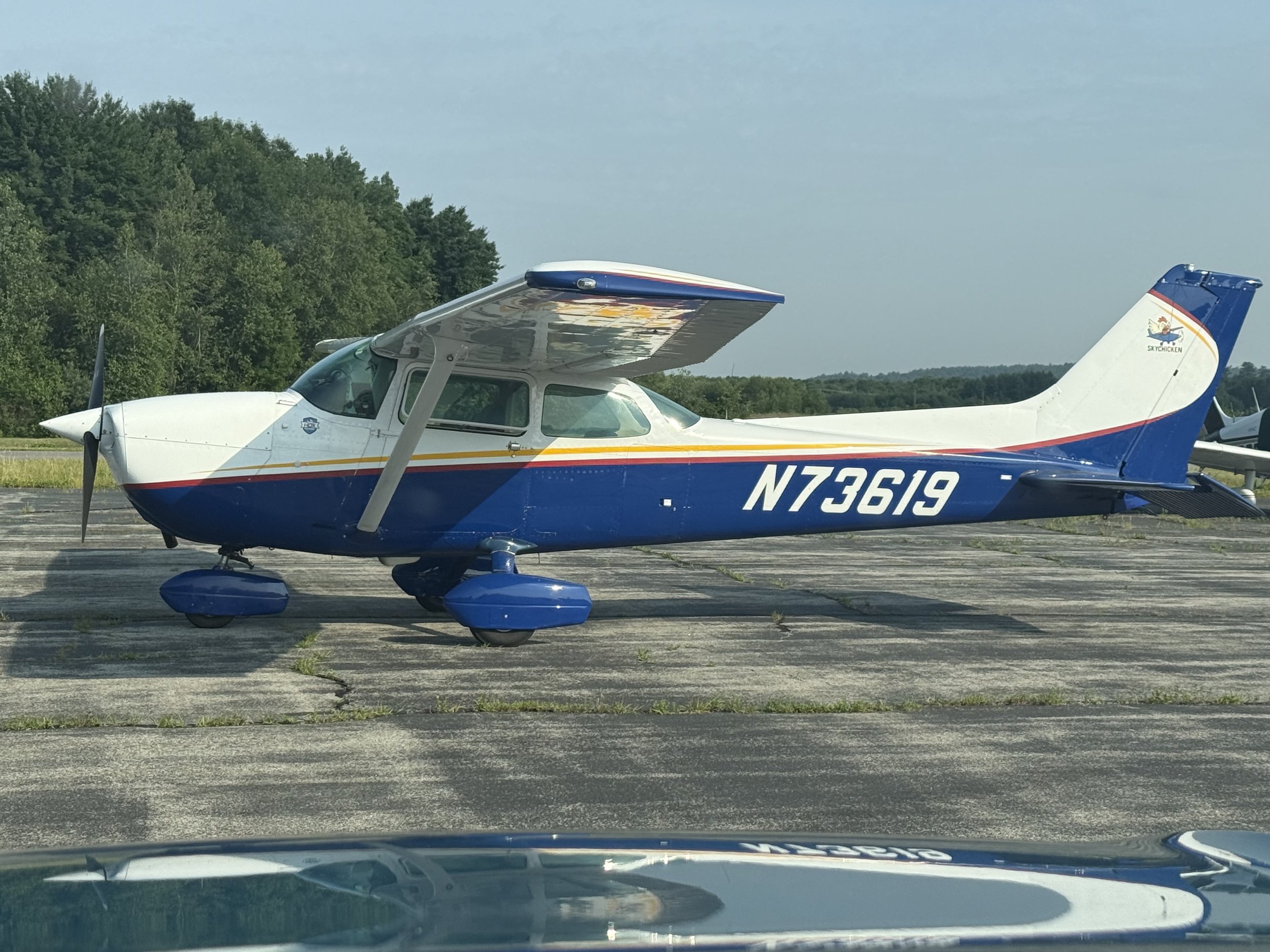
THE AIRPLANE
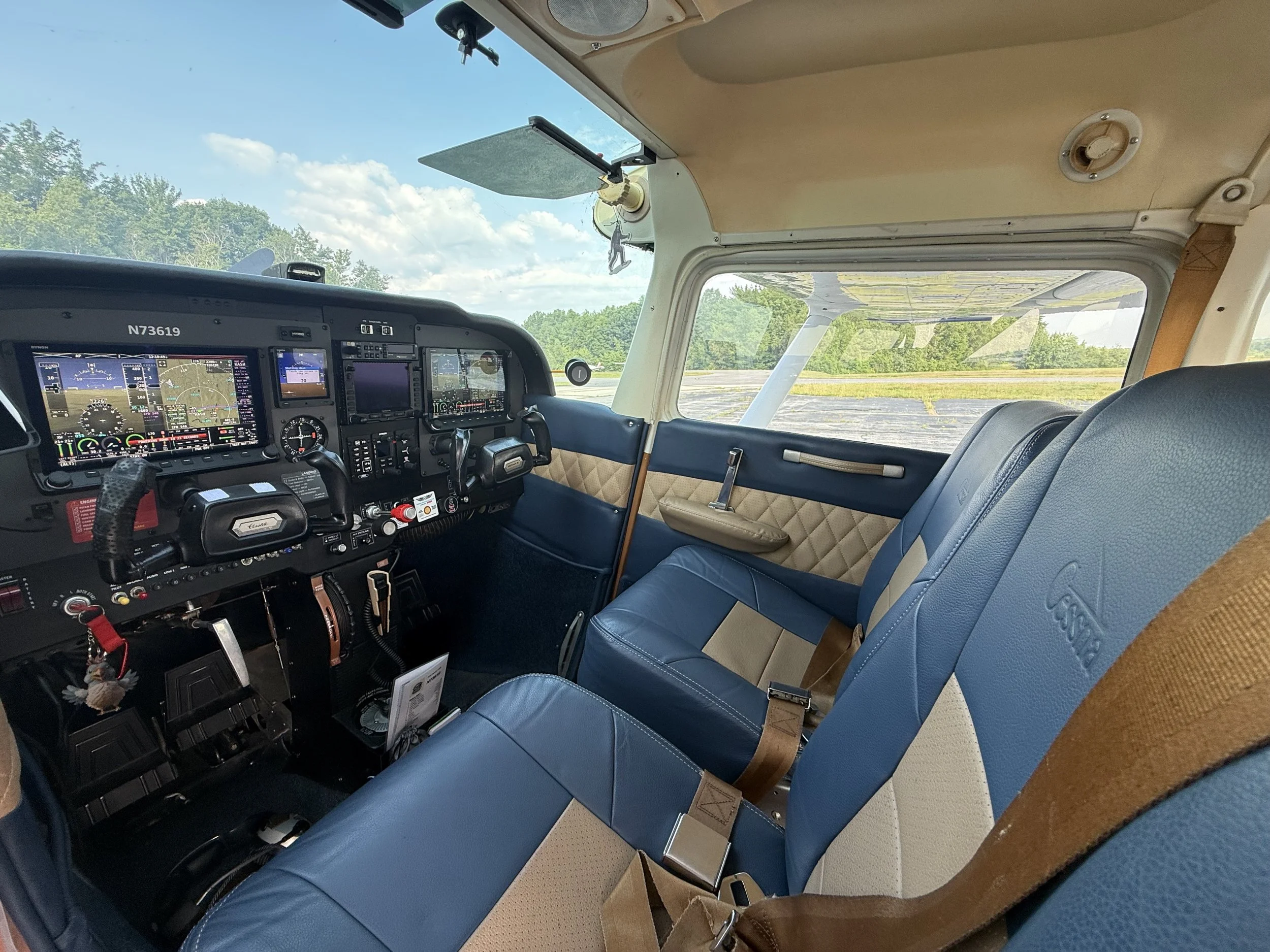
Our Cessna 172 features some of the best technology available. The Dynon Skyview HDX System is paired with an Avidyne IFD 540 FMS that provides a solid IFR platform, capable of flying Autopilot coupled approaches to minimums….and will even fly the missed approach on autopilot. It is the perfect airplane for IFR Students, or those getting ready to transition to professional flying.
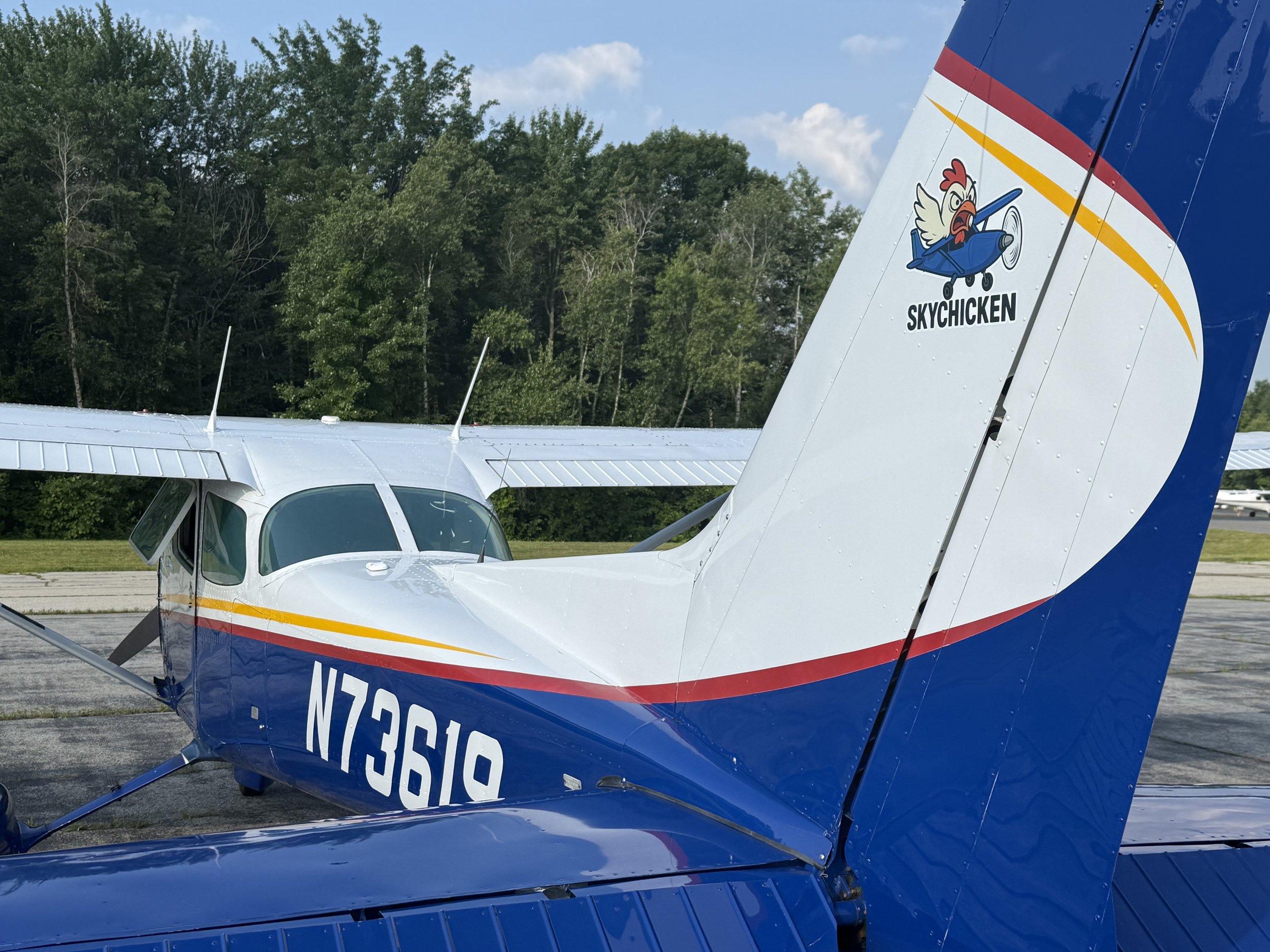
Cessna 172, N73619 “SkyChicken”
Cessna 172
o-320-e2d, 150 hp w/ powerflow exhaust
dual 10” Dynon skyview hdx
avidyne ifd540 waas fms
dynon dual axis autopilot w/ blue level BUTTON. FLY COUPLED APPROACHES WITH GO AROUND.
electronic checklist
adsb in/out
taws terrain warning
active adsb traffic on screen
wifi link integrates with ipad apps
THE SIMULATOR
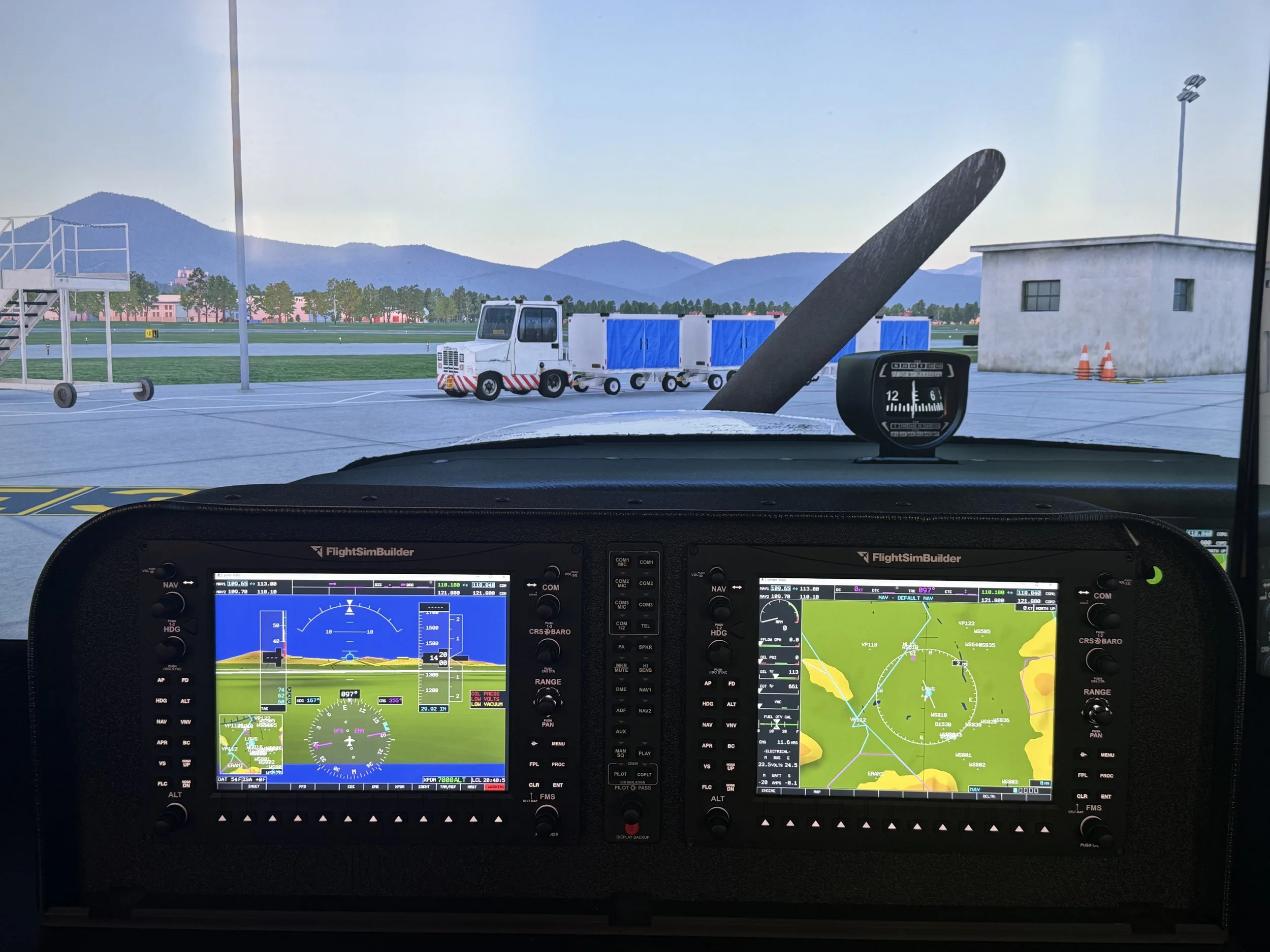
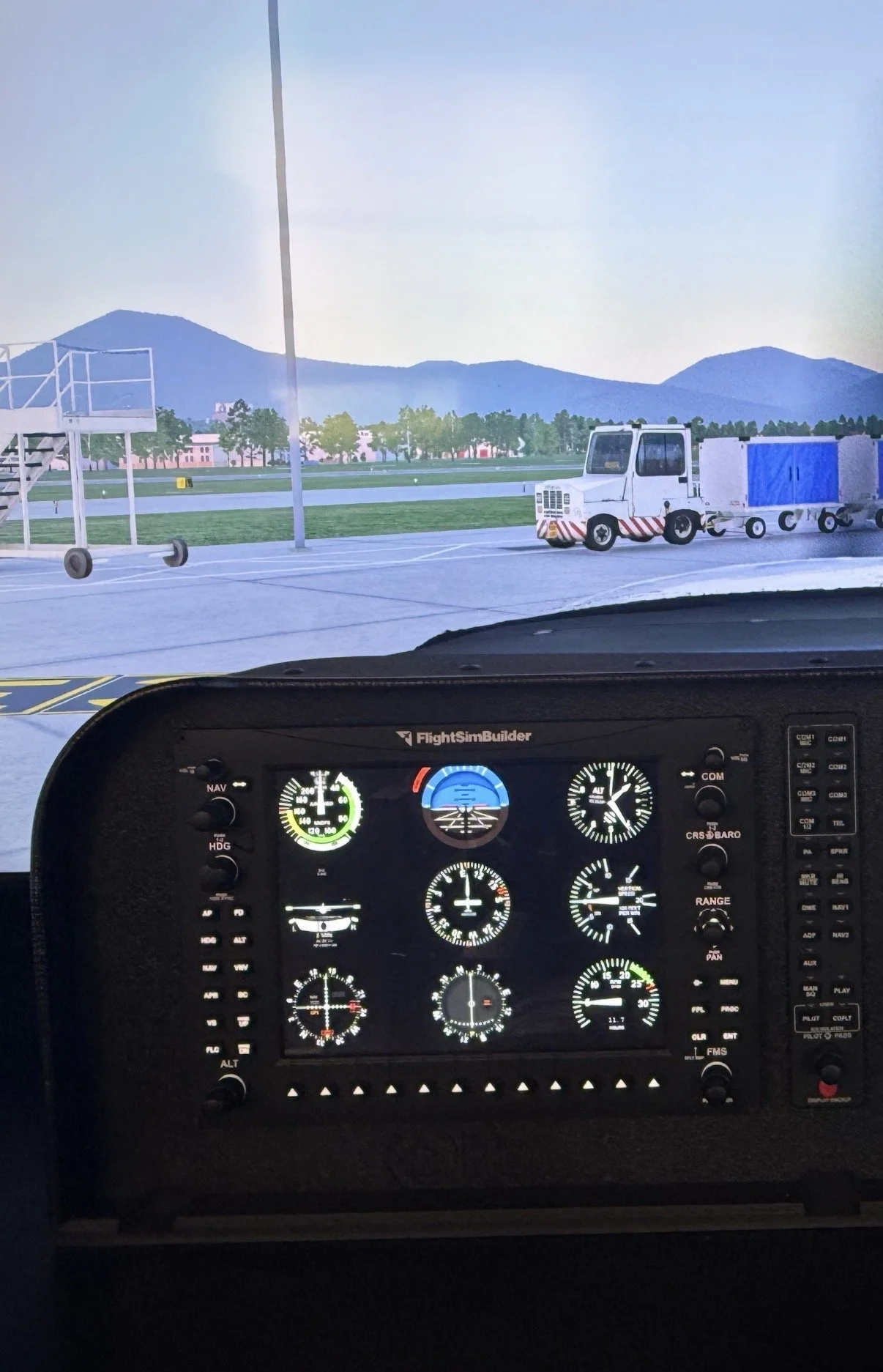
Save time and money by flying in our Simulator. Although not FAA Approved, it is a great teaching tool to help the student master concepts before taking to the sky. This translates into students getting done faster, especially when the weather is bad!
Configurable for G1000 or 6 Pack. Come fly any approach in the world and work on your instrument skills.
Free for our Instrument Students, $20/hr to rent and open to anyone.
THE STUDY LAB
We love aviation. We love helping students grow and learn, so we have created a new concept…..The Study Lab
You don’t have to be one of our students. You dont have to train with us. You just need somewhere to study a concept you may be struggling with. Come to TFS and get help. Learn from Gold Seal instructors for a fraction of normal ground rates. We will have weekly study hours open or 1 on 1 appointment available, for only $20/hr. Ace the written test or knock the socks off the DPE on your next Checkride at The Study Lab.
Send us a Text: 1-877-610-4999
Let’s Work TogetherSend us a message and let us know how we can help you achieve your goals!